


MoodWallet: Money Management
4.341.00 Reviews
App Specs
- Version
- 2.12.0
- Updated On
- License
- Free
- Downloads
- 10,000+
- Developer
- Jomo Labs
- Categories
- Finance
- Platform
- Android
Screenshots


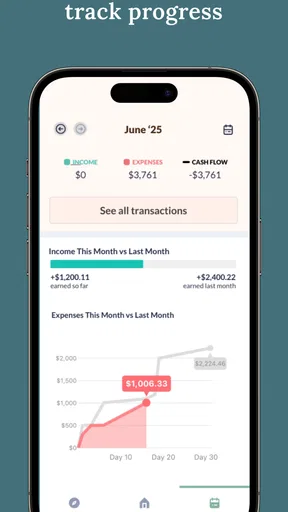
 Analysis by AppCompare
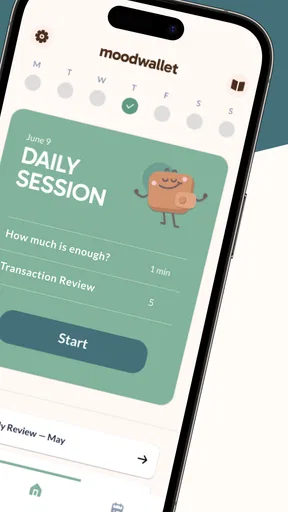
I approached MoodWallet: Money Management as a finance app for people who want to feel more in control of spending without turning every purchase into a spreadsheet entry. Its central idea is appealing: connect money decisions with your mood, then use that awareness to spend more deliberately. In my experience, that makes it feel less intimidating than a traditional budgeting tool, especially if detailed categories and strict monthly targets usually make you give up.
Developed by Jomo Labs, the app is free to install and is rated for Everyone. It has built a modest but meaningful user base, with over ten thousand installs, an average rating of 4.3 from around 150 ratings, and 41 written reviews. Those figures suggest a product that people generally enjoy, although it is not as established as the best-known finance services. The current release is version 2.12.0, and it runs on Android 7.0 or later. Optional purchases range from $6.99 to $89.99 per item, so I would explore the free experience carefully before paying for anything.
How MoodWallet feels to read and navigate
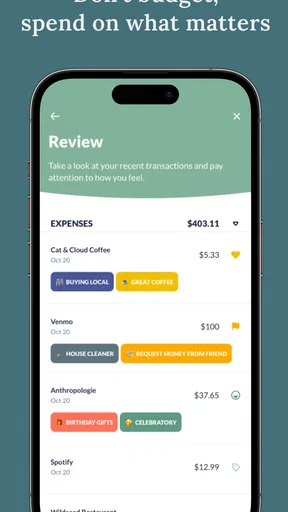
The strongest part of the concept is that it gives financial reflection a more human entry point. Instead of beginning with a wall of figures, I found myself thinking about why I wanted to spend, whether the purchase matched my priorities, and how I felt afterward. That shift matters for people who already associate budgeting with guilt or failure. A conventional expense tracker may tell you that money left your account; this approach encourages you to examine the decision behind it.
The short description, “MoodWallet,” is a good summary of the app’s identity, while the longer store summary presents it as a way to reduce stress and spend better without requiring a conventional budget. I would not interpret that as meaning money management becomes effortless. Rather, the app’s appeal is that it tries to reduce the mental resistance that often comes before opening a finance app.
For readability, the most useful habit is to slow down and treat each prompt as a small reflection rather than something to complete as quickly as possible. This is not an app I would open while rushing through a checkout line. I get more value when I use it during a quiet moment, because the emotional part of the process can be lost if I tap through automatically.
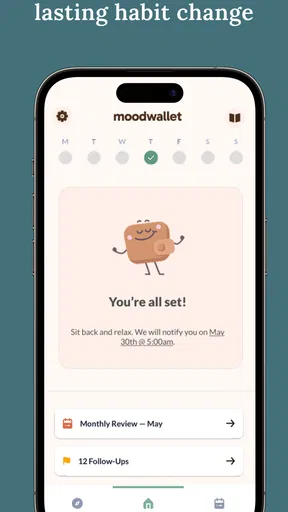
Navigation also benefits from a simple personal routine. I would use it after a shopping trip, at the end of a workday, or when reviewing a purchase that felt unusually satisfying or uncomfortable. That creates a chain between the event and the reflection. If I only open it occasionally and try to reconstruct every decision from memory, the experience becomes less useful and the app starts to resemble an ordinary spending log.
One practical insight is to use the app as a decision checkpoint rather than a complete financial archive. Before buying something nonessential, I would pause and ask whether I am responding to stress, boredom, social pressure, or a genuine need. That small delay can be more valuable than a beautifully organized list of transactions. It is a different workflow from a bank app, and it works best when the goal is changing behavior rather than producing perfect records.
Worth Reading Before You Choose

EA SPORTS FC Mobile 26 Is a Bigger Football Game, but It Takes Time

Flipboard Shows What News Apps Must Do Beyond the Feed

Switching to Android Auto Means Rethinking Your Driving Routine

Google Calendar Makes a Crowded Week Easier to Manage

Ludo King Makes the Most of the Minutes Between Plans

Baby Panda World Brings Quick Play to Modern Phones, but Its Game Library Feels Busy
People who prefer large, highly visible totals and dense dashboards may find this style less immediately satisfying. Traditional finance tools often put balances, categories, charts, and due dates at the center. MoodWallet’s value is more reflective, so readers looking for instant numerical answers may need another app alongside it. I see that as an important distinction rather than a flaw: it is aimed at the human side of spending, not just the accounting side.
Making financial reflection easier for different users
From an inclusive perspective, the app’s conversational idea can help users who find financial terminology difficult. A person does not need to begin with concepts such as cash-flow forecasting or category allocation to think about a purchase. Starting with feelings and intentions may be easier for someone who is new to money management, has had negative experiences with budgeting, or becomes overwhelmed by too many figures at once.
That said, emotional language is not equally comfortable for everyone. Some users may prefer concrete prompts, short labels, and direct actions. Others may find it difficult to identify a mood or may not want to connect personal feelings with spending. I would recommend treating the reflective questions as guidance, not as a test of whether you are using the app correctly. If a prompt does not fit, the useful response is to move on and keep the process practical.
I also think the app can suit people whose financial situations change from day to day. A rigid budget can feel discouraging when income is irregular, household expenses fluctuate, or unexpected costs appear. A mood-based check-in does not solve those problems, but it can still provide a stable habit: notice the decision, name the pressure behind it, and decide what to do differently next time.
For someone managing money with a partner, the app may be most useful as a private reflection tool before a shared conversation. I would not use a personal mood record as a substitute for agreeing on bills and responsibilities. Instead, I would use it to explain patterns more clearly: perhaps convenience spending rises during exhausting weeks, or social purchases become harder to resist in certain situations. That kind of observation can make a later discussion less accusatory.
Motor and sensory considerations in everyday use
Finance apps can create friction through tiny controls, crowded screens, or interactions that demand precise tapping. With MoodWallet, I would judge the experience not only by whether I can complete a task, but by how much concentration it requires. A short reflection is easier to fit into daily life than a long form, particularly for someone using a phone one-handed or while attention is divided.
Still, users with motor difficulties should test the actual controls on their own device before committing to a paid plan. A design that feels comfortable on one screen size may feel cramped on another. I would also avoid using it while walking, commuting, or carrying bags, because financial reflection deserves deliberate attention and those situations can make tapping less reliable.
For sensory needs, the emotional focus may be a positive or a negative. Some people will appreciate a calmer alternative to dashboards full of alerts and numbers. Others may prefer a very predictable, low-stimulation interface and may find mood-based prompts too personal or mentally demanding. I would recommend using the app in a quiet setting and deciding whether its tone helps you focus or adds another layer of effort.
A useful workaround is to separate observation from action. If I am tired or overstimulated, I can make a quick note of the purchase and return to the reflective part later, rather than forcing myself to answer thoughtfully at the wrong moment. The app becomes more accessible when I treat it as a flexible habit instead of a task that must be completed immediately after every transaction.
People who rely on assistive technologies should check how the current Android release behaves with their particular setup. I would not assume that a finance app’s emotional simplicity automatically guarantees compatibility with every accessibility tool. The safest approach is to install the free version, try the main flow with the settings and input methods you already use, and only then decide whether it belongs in your regular routine.
Where it fits when life is busy or unpredictable
Situational access is one of the app’s most interesting strengths. A person may have enough financial knowledge but very little energy after work, during a stressful move, or while caring for someone else. In those moments, a full budgeting session can feel impossible. A brief check-in about a purchase may be more realistic than updating multiple categories and reconciling every account.
Imagine finishing a difficult shift and opening a food delivery app because cooking feels exhausting. I would not expect MoodWallet to tell me whether the order is affordable unless I already know my broader financial position. What it can offer is a pause: am I paying for necessary convenience, reacting to stress, or repeating a habit I will regret? That distinction can help me make a conscious choice without turning one meal into a moral judgment.
Another realistic use is after an online shopping session. If I notice that I add items to a cart late at night, I can use the app to identify the circumstances around those purchases. The insight is not simply “buy fewer things.” It might be “do not make discretionary decisions when I am tired,” or “wait until I can compare the purchase with a current priority.” That is a more actionable rule, and it is the kind of conclusion a standard bank statement rarely provides.
For students and first-time budgeters, the lack of a strict budgeting mindset can lower the entry barrier. I would use it alongside a basic account balance check, not instead of one. The app can help build awareness before someone is ready to manage recurring costs, savings goals, or debt repayments in greater detail.
For users with irregular income, MoodWallet may be better as a behavioral companion than as the main financial system. When pay varies, the most urgent questions are often practical: what is available, what is due, and what must be protected? A mood-based tool cannot replace those checks. It can, however, help identify discretionary habits that become risky when income is uncertain.
This is also where comparison with usual alternatives becomes important. A banking app is better for current balances and official transactions. A spreadsheet is better for custom formulas and long-term planning. A conventional budgeting app is usually better for assigning money to categories and monitoring limits. MoodWallet is more suitable when the missing piece is self-awareness. I would pair it with one of those tools if I needed precise financial control.
What may still create barriers
The biggest limitation is that reflection does not automatically produce a complete picture of your finances. Someone who needs bill reminders, debt payoff planning, shared household accounts, or detailed spending reports may find the app too narrow. Its promise of spending better without a conventional budget is attractive, but users should not confuse a lighter process with a full replacement for financial planning.
The optional purchase range also deserves attention. The app is free to start, which makes testing straightforward, but the presence of items from $6.99 to $89.99 means the cost of deeper use may matter to different households. I would avoid purchasing immediately. First, I would decide whether the mood-based workflow is something I will actually use for several weeks, then assess whether any paid option adds enough value to justify the expense.
Another barrier is consistency. The app can prompt better questions, but it cannot make a user record every relevant decision or act on every insight. If I open it only after purchases I already regret, the experience may become self-critical. I get better results by using it neutrally, including for purchases that went well. That helps distinguish healthy spending from impulsive spending instead of treating all enjoyment as a problem.
Privacy-minded users may also want to think carefully about how comfortable they are recording emotional information in a finance context. I would read the app’s current privacy details before entering anything sensitive and would keep entries focused on useful observations rather than deeply personal information. That is sensible with any app that combines money and mood, even when the interface feels friendly.
There is also a cultural and personal limitation in the idea of mood-led spending. Not every financial decision is emotional, and not every emotion points to a bad choice. Buying a gift, paying for accessibility, choosing convenience during illness, or spending on a meaningful experience can be entirely reasonable. I would use the app to understand my decisions, not to label them as good or bad automatically.
Users who need strong visual customization, advanced accessibility controls, or a highly structured interface should test the app rather than rely on its simple concept. A friendly tone can make an app feel approachable, but true usability depends on the details of text, controls, contrast, focus order, and interaction on the individual device. The free entry point makes that trial less risky.
My inclusive verdict after using the approach
I recommend MoodWallet to people who want to change their relationship with spending and who feel pushed away by conventional budgeting. Its most valuable contribution is the pause between impulse and action. By connecting a purchase with context and feeling, it can reveal patterns that a transaction list leaves invisible. That makes it especially interesting for beginners, irregular spenders, and anyone who wants a gentler way to start paying attention.
I would not recommend relying on it alone for serious financial administration. If your priority is tracking every bill, planning around debt, managing a shared household, or seeing exact account information, a bank service, spreadsheet, or full budgeting app will be the stronger primary choice. MoodWallet works best beside those tools, filling the behavioral gap they often leave open.
Its inclusive potential comes from lowering the emotional and technical threshold for starting. You can approach money through everyday experiences rather than financial jargon, and you can use the reflection at a pace that fits your circumstances. But accessibility is personal, so I would test the reading experience, touch targets, input flow, and emotional tone with the settings you depend on.
My final advice is to begin with one repeatable situation, such as online shopping after a tiring day or convenience purchases during a busy week. Use the app to identify the trigger and write down one practical adjustment for next time. If that process gives you insight without making you feel judged, it is probably a good fit. If you need exact figures and firm financial controls first, choose a more traditional finance tool and consider this one only as a companion.
Overall, MoodWallet is a thoughtful free finance app from Jomo Labs with a clear point of view. It does not try to win by adding more financial machinery; it tries to make the act of noticing your spending feel more manageable. For me, that is its genuine strength, provided I remember that emotional awareness is one part of money management, not the whole system.
Pros
- Simple interface makes daily money tracking quick and approachable.
- Custom categories help organize spending around personal habits and priorities.
- Budget insights can make recurring overspending easier to recognize.
- Useful for monitoring several financial goals in one place.
- Lightweight design keeps the app focused on essential money-management tasks.
Cons
- May feel limited for users needing advanced investment or tax tracking.
- Manual transaction entry can become tedious without reliable bank syncing.
- Budget recommendations may require consistent data to remain accurate.
- Some features may be restricted behind a premium subscription.
- Financial data privacy policies should be reviewed before adding sensitive information.
FAQs for MoodWallet: Money Management
What is MoodWallet: Money Management used for?
MoodWallet: Money Management is designed to help you organize your personal finances in a more visual and emotionally aware way. You can use it to record income and expenses, review spending habits, create budgets, and monitor financial goals. Its mood-focused approach may also help you notice how emotions influence purchases, although it should be viewed as a tracking and planning tool rather than professional financial advice.
Is MoodWallet: Money Management suitable for beginners?
Yes, MoodWallet can be useful for beginners who want a straightforward way to start understanding their money. The app is generally centered on entering transactions, categorizing spending, and reviewing summaries instead of requiring advanced accounting knowledge. However, the usefulness of the results depends on consistently recording purchases and setting realistic categories, limits, and savings objectives.
Does MoodWallet require access to my bank account?
Before downloading or subscribing, users should check the current app description and privacy information to confirm whether MoodWallet supports bank synchronization in their region. If the app is used manually, you can normally enter transactions yourself without connecting a bank account. Avoid granting financial permissions unless you understand why they are requested and how your data will be protected.
Is MoodWallet: Money Management free to use?
The available features, advertisements, subscriptions, or one-time purchases may vary between the Android and iOS versions and can change over time. Check the store listing carefully before installing, especially the in-app purchase section and subscription terms. If a premium plan is offered, review its renewal conditions, trial period, cancellation process, and exactly which budgeting tools are included.
Can MoodWallet replace a financial adviser or budgeting service?
No. MoodWallet is intended to support personal organization, spending awareness, and everyday budgeting, but it does not replace a qualified financial adviser, accountant, bank, or debt counselor. The app cannot guarantee savings results or provide personalized investment, tax, or legal recommendations. Use its reports as a guide, verify important figures independently, and seek professional help for complex financial decisions.


